
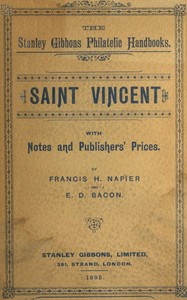
Saint Vincent, with notes and publishers' prices by Napier and Bacon
Let's clear up the title first, because it's a mouthful. This isn't a novel about a saint. It's a book about a book—specifically, a famous auction catalog from 1846. Sir Edward Denny Bacon takes that old catalog for the sale of William Upcott's library and uses it as a skeleton to build a biography.
The Story
The core of the book is the tale of William Upcott, a 19th-century clerk and an utterly devoted book and manuscript collector. His London home was a famous treasure trove, packed with historical letters and rare volumes. Bacon walks us through Upcott's life, showing how his collecting passion defined him. The tragedy, quietly told, is that Upcott's fortunes changed. In his old age, facing financial need, he was forced to sell his life's work. The 1846 auction catalog that forms the first part of this book is the document of that dispersal. Bacon doesn't just list the items; he adds notes, providing context about the pieces and their significance, turning a dry list into a narrative of a collection's rise and fall.
Why You Should Read It
This book surprised me. I expected a specialist reference work, but it's really a character study. Bacon's writing, while of its time, has a clear affection for his subject. You feel the weight of Upcott's loss when his books are sold off lot by lot. It makes you think about what we value and what we leave behind. The 'publishers' prices' part sounds clinical, but in context, they become a scorecard for a man's passion. It's a quiet, melancholic look at the relationship between a person and their possessions, and how the history of objects is inseparable from the people who cherished them.
Final Verdict
This is a niche book, but a rewarding one. It's perfect for history buffs, bibliophiles, or anyone who enjoys 'slow' non-fiction that uncovers a hidden story. If you like shows or books that trace the provenance of artifacts, you'll find the same detective-like appeal here. It's not a fast-paced read; it's a contemplative one. You won't find sweeping drama, but you will find a very human story of obsession, curation, and the quiet heartbreak of having to say goodbye to a world you built, one book at a time.
This publication is available for unrestricted use. It is now common property for all to enjoy.
Jennifer Brown
1 year agoIf you're tired of surface-level information, the author clearly has a deep mastery of the subject matter. I'm glad I chose this over the other alternatives.









Elizabeth Harris
3 days agoThe layout of the digital version made it easy to start immediately, the inclusion of diverse viewpoints strengthens the overall narrative. It definitely lives up to the reputation of the publisher.