
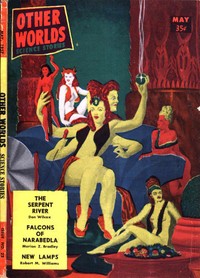
New Lamps by Robert Moore Williams
Robert Moore Williams' 'New Lamps' is a classic slice of mid-century science fiction that packs a surprising punch. It feels like a Twilight Zone episode in book form—a single, brilliant idea explored with tense, straightforward storytelling.
The Story
James Elwood is a scientist on the verge of a breakthrough. He's created a new lamp that emits a 'perfect' white light, far superior to anything that exists. But from the moment he demonstrates it, strange events unfold. People exposed to the light begin to experience shared, powerful hallucinations. They don't just see things; they feel them, believe in them completely. As the effects intensify, it becomes clear this is no mere trick of the mind. The lamp isn't just illuminating a room; it's somehow illuminating hidden layers of reality, or perhaps even creating new ones. The story follows Elwood's desperate scramble to understand and contain the consequences of his invention before it unravels the world he knows.
Why You Should Read It
What I love about this book is its focus on the human reaction to the impossible. Williams isn't overly concerned with the technical 'how' of the lamp. He's fascinated by the 'what now?' The characters are everyday people—scientists, reporters, bystanders—suddenly faced with evidence that their understanding of the universe is wrong. The tension comes from their fear, curiosity, and stubborn denial. It's a story about the arrogance of discovery and the terrifying responsibility that comes with it. The lamp is a metaphor for any powerful new knowledge or technology; the question is whether humanity is mature enough to handle the truth it reveals.
Final Verdict
'New Lamps' is perfect for readers who love thought-provoking, concept-driven science fiction without a lot of frills. If you enjoy the moral puzzles of early Asimov or the eerie, everyday invasions of Philip K. Dick, you'll find a kindred spirit here. It's also a great, quick read for anyone curious about the roots of modern sci-fi—a time when stories asked big 'what if' questions with both wonder and a sharp dose of caution. Don't expect sprawling space operas; expect a bright, unsettling light shone directly on the fragility of human perception.
Legal analysis indicates this work is in the public domain. Enjoy reading and sharing without restrictions.
Susan Martin
1 year agoAs a professional in this niche, the nuanced approach to the central theme was better than I expected. Thanks for making such a high-quality version available.
Ashley Lee
9 months agoMy first impression was quite positive because the logic behind each conclusion is easy to follow and verify. I appreciate the effort that went into this curation.
David Harris
7 months agoRight from the opening paragraph, the practical checklists included are a great touch for real-world use. An excellent example of how quality digital books should be formatted.
Donald Lopez
10 months agoHaving followed this topic for years, I can say that the insights into future trends are particularly thought-provoking. A mandatory read for anyone in this industry.





Patricia White
1 year agoThis was exactly the kind of deep dive I was searching for, the practical checklists included are a great touch for real-world use. A trustworthy resource that I'll keep in my digital library.