
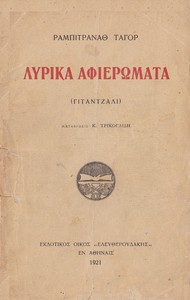
Λυρικά αφιερώματα (Γιταντζάλι) by Rabindranath Tagore
I picked up Λυρικά αφιερώματα (Γιταντζάλι) knowing Tagore won a Nobel Prize, but I wasn't prepared for how direct and personal it would feel. This Greek translation presents his famous Gitanjali (or 'Song Offerings'), a series of short, lyrical poems that read like prayers or intimate diary entries.
The Story
There isn't a plot in the traditional sense. Think of it as following the emotional and spiritual journey of a single voice. The speaker moves through different moods—sometimes he feels close to the divine, filled with joy and gratitude. Other times, he feels distant, lost in his own pride or the distractions of daily life. He compares his soul to a frail boat on a stormy sea, a thirsty flower waiting for rain, and a traveler on a long road home. The 'story' is in watching this seeker slowly, patiently, try to strip away everything that keeps him from a genuine, humble connection. It's about the struggle to be truly present and open.
Why You Should Read It
I was surprised by how calming this book was. In our noisy world, Tagore's voice is a balm. He finds the sacred in the ordinary—in a child's laughter, the end of a day's work, or a simple act of giving. His poetry isn't about grand religious dogma; it's about the raw, human experience of longing and love. Reading a few poems each morning became a kind of meditation for me. It helped me slow down. You don't have to share any specific belief to get something from it. At its heart, it's about the universal need to feel that our lives have meaning and that we are part of a larger, beautiful whole.
Final Verdict
This book is perfect for anyone who enjoys reflective, quiet moments. If you like poets like Rumi or Mary Oliver, you'll find a kindred spirit in Tagore. It's also a great choice if you're curious about world literature but want to start with something accessible and deeply emotional, not dense or academic. The Greek translation I read felt fluid and musical, capturing the song-like quality of the original. Give it a try when you need a break from fast-paced stories. Keep it on your nightstand. It's not a book you race through; it's a book you sip, one heartfelt offering at a time.
This work has been identified as being free of known copyright restrictions. Thank you for supporting open literature.
Karen Williams
1 year agoAs someone who reads a lot, the clarity of the writing makes this accessible. I couldn't put it down.
Mark Robinson
1 year agoAs someone who reads a lot, the depth of research presented here is truly commendable. Highly recommended.
Susan White
1 year agoI have to admit, it manages to explain difficult concepts in plain English. Thanks for sharing this review.
Andrew White
1 year agoFinally found time to read this!



Barbara Moore
1 year agoBeautifully written.