
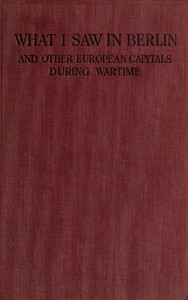
What I Saw in Berlin and Other European Capitals During Wartime by Piermarini
Imagine you're on a work trip that suddenly becomes a prison sentence. That's what happened to Piermarini. An Italian journalist based in Berlin, he was there in 1939 when the war started. As a citizen of a then-neutral country, he wasn't shipped off to a camp, but he couldn't easily leave either. So, he did the only thing he could: he watched. This book is his record of that watching, moving from Berlin to other European capitals as the war unfolded.
The Story
There isn't a single plot in the traditional sense. Instead, it's a series of sharp, vivid snapshots. We see Berlin not just through parades and propaganda, but through the tired eyes of a tram conductor, the forced cheer of a restaurant owner, and the sudden, chilling silence when an air raid siren cuts off a conversation. Piermarini then takes us to occupied Paris, where glamour and fear exist side-by-side, and to the haunting emptiness of Warsaw. The 'story' is the slow, grinding transformation of everyday life into something surreal and fragile. It's about the coffee that still gets served, the newspapers that still get printed, and the overwhelming question hanging over it all: what happens tomorrow?
Why You Should Read It
This book gets under your skin because it removes the historical distance. We're so used to seeing World War II in black and white newsreels, with clear-cut heroes and villains. Piermarini gives us the messy, confusing color version. He captures the absurdities—like arguing about the quality of bread while the city is being bombed—and the profound loneliness of being a neutral party in a deeply partisan world. His writing isn't flashy; it's clear, direct, and incredibly powerful because of it. You feel his tension, his fear, and his stubborn commitment to just see people as people, not as symbols.
Final Verdict
If you're tired of the same old war narratives and want something that feels human and immediate, this is your book. It's perfect for anyone who loves history from the ground level, fans of personal diaries and memoirs, or readers who enjoy travel writing from a place that no longer exists. It's not a fast-paced thriller, but a slow, thoughtful, and unforgettable walk through a world on fire, guided by a man who refused to look away.
This historical work is free of copyright protections. Use this text in your own projects freely.
Mary Harris
1 year agoHaving read the author's previous works, the evidence-based approach makes it a very credible source of information. An excellent example of how quality digital books should be formatted.
Sarah Lopez
11 months agoI've gone through the entire material twice now, and the language used is precise without being overly academic or confusing. A mandatory read for anyone in this industry.
Emily Gonzalez
10 months agoAs a long-time follower of this subject matter, the structural organization allows for quick referencing of key points. This is a solid reference for both beginners and experts.
Susan Miller
8 months agoI found the author's tone to be very professional yet accessible, the transition between theoretical knowledge and practical application is seamless. Truly a masterpiece of digital educational material.
Michael Lee
2 months agoWhile browsing through various academic sources, the narrative arc keeps the reader engaged while delivering factual content. Well worth the time invested in reading it.