
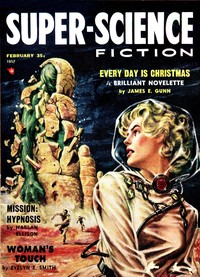
The great illusion by Manly Banister
I picked up *The Great Illusion* expecting a fun vintage sci-fi read, and I got something that creeped me out on a whole ‘nother level. Manly Banister doesn't just reach for plot twists—he grabs your brain by the shoulders and shakes it.
The Story
Our main guy is an ordinary guy—a geologist or some regular scientist—who starts noticing these weird gaps in daily life. The news feeds repeat themselves. People's faces flicker in a particular light. Then he sees *it*: a stage-managed background, like a movie set placed over the wilderness. The world, as it turns out, is a carefully controlled 'preserve.' Human beings aren't living—they are specimens, kept docile by happiness pills and manufactured dreams. The guys running the show aren't alien or evil (or maybe they are), but they are determined to keep everyone in a blissed-out haze. Our hero fights not just for one truth, but for the right to feel pain, to realize missing facts—in short, the right to know what’s really going on behind life’s curtain.
Why You Should Read It
You know how *The Matrix* blew minds? This takes that basic shape and goes deeper into the quiet, scary details—like what if going off your happy pills made you start seeing the actors in the world? And how would you know who to trust, when trust might be part of the act? I loved how the book doesn't just drop a big reveal and say ‘Okay, great, finish it.’ It makes you feel the main character's paranoia, his trapped loneliness. Banister punches harder by never over-explaining—some mysteries stay murky, which makes skin crawl more than any monster truck chase. Plus, spoiler: The ‘big enemy’ makes a kind of perverse sense. It's honestly scarier than straightforward bad guys.
Final Verdict
This book is perfect for those who like 1950s sci-fi that acts more like philosophy wearing cheap robot boots. It’s perfect for fans of Philip K. Dick, darker episodes of *Twilight Zone*, or just anyone who has ever asked ‘Is everyone playing some game when I'm not looking?’ It's also great if you need an arguable ‘cheating’ mind-bender—word of honor: the final chapter connects all pages from a burning notebook in a big, happy, or horrifying, denouement.
This historical work is free of copyright protections. Knowledge should be free and accessible.
Matthew Lee
1 year agoBefore I started my latest project, I read this and the formatting on mobile devices is surprisingly crisp and clear. I am looking forward to the author's next publication.