
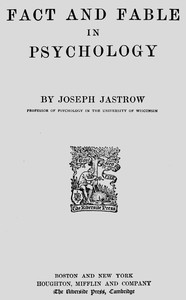
Fact and Fable in Psychology by Joseph Jastrow
Published in 1900, Fact and Fable in Psychology isn't a storybook with a plot. Instead, think of it as a guided tour through the messy borderland between what we know and what we only think we know. Joseph Jastrow, a respected experimental psychologist, noticed a problem: the public was captivated by spiritualism, paranormal claims, and all sorts of pseudoscience. His mission was to build a bridge between the lab and the living room.
The Story
Jastrow structures his book like a series of investigations. He starts by showing how our own senses and minds are unreliable narrators, using simple optical illusions anyone can try. Then, he moves to the big stage shows of the era—the mediums who claimed to contact the dead and the mentalists who seemed to read thoughts. With calm, logical precision, he dissects their methods, revealing how they exploit suggestion, observation, and our natural desire to believe. The final act of the book is about building a scientific mindset. He argues for healthy skepticism, not cynicism, and gives readers a checklist for evaluating extraordinary claims.
Why You Should Read It
What blew me away was how current it feels. Swap out "table-tipping séances" for "social media deepfakes" and Jastrow's points land perfectly today. This isn't just a history lesson; it's a manual for critical thinking. I found myself constantly nodding along, recognizing the same mental traps I fall into. His tone is key—he's never mocking the believer. Instead, he has empathy, explaining that we're all wired to see patterns and make connections, even when they aren't there. Reading it made me feel smarter and more humble at the same time.
Final Verdict
This book is perfect for curious minds who enjoy podcasts about mysteries, skepticism, or the history of ideas. It's for anyone who has ever wondered why fake news spreads faster than facts. While the examples are a century old, the psychological principles are timeless. Be prepared for its age—some language is dated—but if you can look past that, you'll find a surprisingly fresh and urgent guide to navigating a world full of fables, written by a psychologist who wanted us to hold on to the facts.
This is a copyright-free edition. Access is open to everyone around the world.
Kimberly Williams
6 months agoA must-have for graduate-level students in this discipline.
Ethan Hill
1 year agoEnjoyed every page.
Robert Lopez
11 months agoAfter a thorough walkthrough of the table of contents, the level of detail in the second half of the book is truly impressive. It’s a comprehensive resource that doesn't feel bloated.