
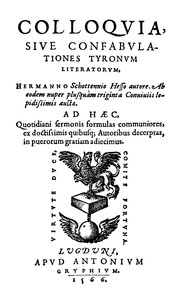
Colloquia, sive Confabulationes tyronum literatorum by Hermannus Schottennius
Let's be clear from the start: 'Colloquia, sive Confabulationes tyronum literatorum' is not a novel. Written by Hermannus Schottennius in the 1500s, it was designed as a practical tool. Its goal was to teach students Latin through dialogue, a common method of the time.
The Story
The 'plot' is the academic year. We follow a group of student 'tyrones' (beginners) as they chat. The chapters are their conversations. They greet each other, go to class, debate their lessons, get scolded, and plan their free time. One dialogue might be about the correct way to conjugate a verb. The next could be a heated discussion about a point of ethics or a complaint about bad food in the dining hall. There's no overarching narrative with a villain or a quest. The journey is their intellectual and social growth, shown entirely through the words they practice. It's the story of any student, anywhere, just wrapped in the specific context of a Renaissance classroom.
Why You Should Read It
This is where the magic happens. Schottennius had to make the dialogues relatable so students would remember them. In doing so, he accidentally created one of the most human documents of the era. You forget you're reading a textbook. You start hearing real voices. The frustration of a difficult concept, the pride in understanding something new, the camaraderie and petty squabbles—it's all there. It demolishes the stiff, formal image we often have of the past. These kids were bored in class, made fun of each other, and worried about their futures. Reading it connects you directly to the daily heartbeat of history, not just its grand events.
Final Verdict
This book is a niche treasure, but a brilliant one. It's perfect for history lovers who want to move beyond politics and wars to see how ordinary (educated) people lived and thought. It's great for language nerds curious about how Latin was actually taught and used. And honestly, it's for anyone who enjoys finding unexpected, intimate stories in old places. It's not a page-turner in the traditional sense, but it is a captivating window. If you approach it ready to listen in on the past, you'll be richly rewarded.
This book is widely considered to be in the public domain. You are welcome to share this with anyone.
Michael Anderson
5 months agoI started reading this with a critical mind, the wealth of information provided exceeds the average market standard. Truly a masterpiece of digital educational material.
Paul Jackson
3 months agoI stumbled upon this title during my weekend research and the language used is precise without being overly academic or confusing. Well worth the time invested in reading it.
David Harris
1 year agoI had low expectations initially, however the content flows smoothly from one chapter to the next. Don't hesitate to start reading.
Joseph Anderson
1 year agoAmazing book.

Patricia Lee
9 months agoExactly what I was looking for, thanks!